Many Bumiputera property owners are surprised to find that they cannot continue selling their units even after fully paying and owning the title, because they still require approval or "consent" from the State Authority before the transfer of ownership is allowed. This article explains in general how this consent process usually works, so you know what to prepare and expect.
When Is Consent From the State Authority Required?
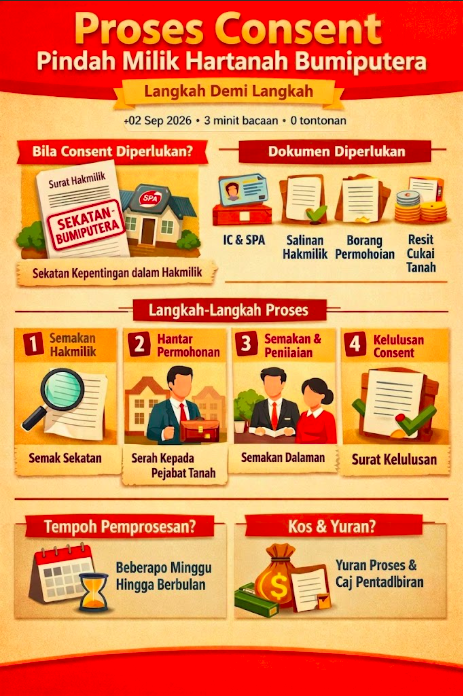
The requirement for consent usually arises when the title of the land/unit has restrictions that state so, either because it is still within the resale restriction period (lock-in period) since it was purchased as a Bumiputera unit with a discount, or because the actual condition in the title requires state approval for any transfer of ownership, not just for releasing the Bumiputera status. These restrictions vary from one state to another, even from one project to another, so the first step is always to check the actual wording on your title.
This is not only applicable when you want to sell. Consent may also be required for other transactions such as pledging the property for additional loans, transferring the title to heirs through inheritance, or adding/removing co-owners. Each type of transaction may have slightly different requirements and application forms, although they all involve the same State Authority.
Documents Usually Required
Although the exact list varies according to the state and the department handling it, the usual documents requested include:
- Copies of the seller and buyer's identity cards (IC)
- Copies of the signed Sale and Purchase Agreement (SPA)
- Copies of the land title/deed
- Official application letter/form to the Land Office or the relevant state Bumiputera unit
- Sometimes an undertaking letter confirming the new buyer's Bumiputera status, if the unit must remain sold to a Bumiputera
- Proof of current land tax/quit rent payment
Application Process Steps
Generally, this process usually goes through the following stages:
- 1. Initial title verification — ensure the actual restrictions in place and which department needs to be applied to.
- 2. Document preparation & official application — usually handled by the lawyer managing the SPA, sent to the District Land Office or a special Bumiputera unit at the State Government Secretary's Office (SUK), depending on the state.
- 3. Internal verification & approval — the authority verifies the buyer's status, original sale conditions, and sometimes requests additional information.
- 4. Consent letter issued — only then can the official transfer of ownership at the Land Office proceed.
Timeframe & Matters to Be Noted
Processing time varies significantly between states, some cases are completed within a few weeks, while others may take months especially if documents are incomplete or require cross-referencing with other departments. Do not make your SPA closing date depend on the assumption of a quick consent period, allow reasonable time in your planning.
Another thing to consider is the cost of processing the consent itself, some states impose processing fees or separate administrative charges apart from the usual legal fees. These costs are usually small compared to the overall transaction amount, but still need to be included in your budget to avoid surprises at the last minute.
Consent vs Bumiputera Restriction Release — Two Different Matters
Another common misconception is equating "transfer consent" with "Bumiputera restriction release". Transfer consent is merely approval for a specific transaction to occur, it does not necessarily remove the Bumiputera status from the title. Conversely, a Bumiputera restriction release application (if approved by the relevant state) is a separate process that permanently changes the title status itself, allowing subsequent sales to anyone without needing further consent.
Not all states allow such releases, and in states that do, the approval criteria are usually stricter than just consent for a single transaction. Ensure that you and your lawyer are clear on the type of application being made, as the long-term impact on the property's value and liquidity is very different.
Practical Advice
As this process and requirements can vary significantly by state, and even by the department handling it, the most important thing you can do is:
- Involve a property lawyer who regularly handles Bumiputera consent cases in the relevant state, they usually know the correct department and the latest forms.
- Do not assume that consent is automatically approved, there are cases that are rejected or require additional conditions.
- Check the actual wording on your land title ("land use category" and "interest restrictions") to understand the actual restrictions applicable to your unit, not general assumptions.
To understand more about the costs and other processes related to the purchase of Bumiputera property, explore our related articles or view current Bumiputera properties at /hartanah.