One of the earliest decisions a potential home buyer needs to make is whether to buy a resale property (an existing house, sold again by the previous owner) or an under-construction property (a new project directly from the developer). Both options have very different sets of advantages and risks, and the suitable choice depends on your financial situation, risk comfort level, and immediate needs. Let's compare them directly so you can make a more confident decision.
Resale Property: What You See Is What You Get
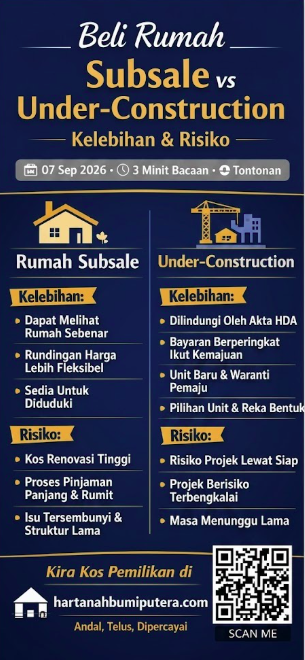
The biggest advantage of buying a resale property is that you can see the actual house before making a decision, not just blueprints or 3D models, but the real house in its actual condition. You can do viewings, check the structural condition, feel the neighborhood atmosphere, and more accurately imagine living there.
In terms of price, resale properties are usually more open to negotiation compared to the relatively fixed prices listed by developers. Individual sellers are usually more flexible, especially if they need to sell quickly for personal reasons.
However, resale properties also bring their own challenges:
- Subsale houses often require renovation or repair work, especially older houses, these costs need to be included in your budget from the start.
- If the seller still has an outstanding housing loan, the process involves loan redemption before the property can be fully transferred to you. This adds another layer of legal process and usually requires a bit more coordination time between the buyer's lawyer, the seller's lawyer, and the bank.
- The quality of property management (for strata such as condominiums) varies — some older buildings are well-managed, others are not. This is important to check before buying.
Under-Construction Houses: Structured Protection, But Requires Patience
Purchasing directly from a licensed developer means your transaction is subject to the Housing Development (Control and Licensing) Act 1966, or more commonly known as the Housing Development Act (HDA). Generally, this act exists to protect homebuyers from developers — it sets a standard format for the Sale and Purchase Agreement (SPA) with its content established, and importantly, it controls the progressive payment schedule tied to the actual construction stages, not arbitrary dates.
This means you only pay according to the actual construction progress — for example, a certain percentage when the foundation work is complete, another percentage when the building structure is complete, and so on. This arrangement helps protect the buyer's money from being paid in full at the beginning before anything is built.
Other advantages of buying under-construction:
- New units, modern specifications, and usually come with a building warranty (defect liability period) where the developer is responsible for repairing defects within a certain period after key handover.
- Opportunity to choose the unit and floor according to your taste (for projects that still have many unit options available).
- Usually there are incentive packages such as rebates or assistance with legal fees/stamp duty offered by the developer.
However, the main risk of under-construction properties is project delays, or in the worst case, abandoned projects. This is why the HDA framework originally existed, due to the history of abandoned housing projects in Malaysia which caused many buyers to lose money and spend a long time waiting for a resolution. Although there is an existing protection framework, the risk of delays still exists and it is common in the industry, although not necessarily reaching the level of abandonment.
How to Reduce the Risk of Buying Under-Construction Properties
- Check the developer's track record — previous projects, whether completed on time, and their reputation among previous buyers.
- Check the developer/project's financial status and licenses through official channels before signing any agreement.
- Clearly understand the payment schedule and the expected key handover date (Vacant Possession) stated in the SPA.
So, Which One Is Suitable For You?
If you need a home to move into immediately, want to feel and see the actual house before buying, subsale might be more suitable. If you have flexibility in timing, want a new unit with a more manageable payment schedule at the beginning, and are comfortable with a little waiting, an under-construction project from a responsible developer could be a good option. Many buyers actually combine both strategies — buy a subsale for current residence, and consider a new project for long-term investment.
Whatever your choice, make sure you have already calculated the full transaction costs before proceeding — try the ownership cost calculator at hartanahbumiputera.com for an estimate of legal fees, stamp duty and other costs that need to be prepared before signing any agreement.