Investing in a new housing project that has just been launched or is still under construction (under-construction / under-con) is an exciting achievement. However, buying a house directly from the developer requires different cautious steps compared to buying a resale house (completed house/second-hand).
Here are 12 critical tips to ensure your purchase of a house under-con is safe, smooth, and not financially burdensome:
1. Set a Realistic Budget & Monthly Affordability
Before you get captivated by the developer's luxurious brochure, calculate your actual loan eligibility first. As a main guideline, your monthly house instalment should not exceed one third (1/3) of your net income. Never use your cash flow up to the maximum limit; leave space for emergency savings.
2. Take Into Account Hidden Costs & Post-Handover Costs
Even though developers often offer various attractive packages (such as rebates or free legal fees), you still need to budget for costs outside the selling price, including:
Valuation fee (valuation fee) and disbursement charges (disbursement charges).
Home insurance premium (MRTT or MLTT).
Utility deposit (water, electricity, and internet installation).
Post-key handover costs: Maintenance fees (maintenance fees), sinking fund (sinking fund), and home renovation costs.
3. Utilise Bumiputera Quotas and Discounts
If you are eligible, maximise the benefits of Bumiputera Quotas. Every new housing project is legally required to allocate a certain percentage of units to Bumiputera buyers, which usually comes with a discount between 5% to 15%. As quota conditions and Bumiputera release mechanisms (Bumiputera release) vary by state, always confirm these detailed terms with the developer or state land office.
4. Investigate Developer's Performance Record & Financial Standing
Not all developers have the same reputation. Before paying a deposit, conduct a background check on the developer. Check the official portal Ministry of Housing and Local Government (KPKT) blacklist to avoid developers with a history of stalled projects, delayed handover of keys, or unresolved late delivery compensation (LAD) claims. Choose a developer with a strong and stable reputation.
5. Check the Developer's APDL Number
For any valid new housing project, the developer must have APDL (Advertising Permit and Developer's License). Always check the bottom of brochures, signage, or the project's website to ensure that this license number, validity date, and approved building plan number are present. The presence of APDL proves that the project is officially regulated by the government.
6. Dapatkan Kelulusan Awal Pinjaman (Pre-Approval) Lebih Awal
Jangan tunggu sehingga sudah memilih unit baru mahu berbincang dengan pihak bank. Dapatkan kelulusan awal (pre-approval / indicative approval) from several banks first. This step sets the maximum loan eligibility limit, speeds up the formal application process later on, and reduces the risk of the deposit being forfeited if the loan is suddenly rejected.
7. Review the Master Plan (Master Plan) & Surrounding Infrastructure
When buying a house in a new township (new township) or high-rise residential (condominium/apartment), don't just look at the floor plan of your unit. Study the overall master plan of the area. Check future infrastructure plans such as new highways, MRT/LRT extensions, schools, and commercial hubs. Conversely, ensure that your chosen block or unit does not face structures that are less desirable such as high-voltage electrical substations or wastewater treatment plants.
8. Use a Specialised Property Portal for Comparison
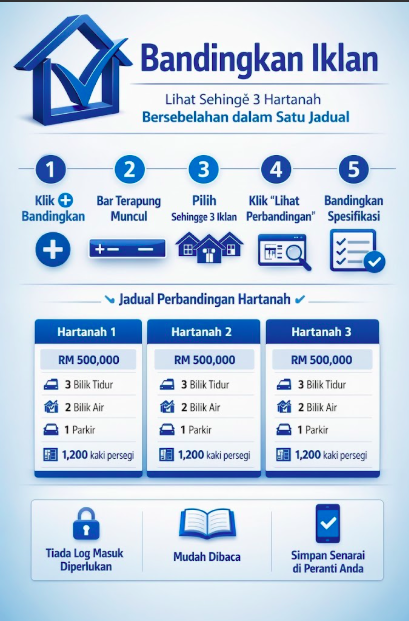
Avoid focusing on a single project without making comparisons. Use specialised platforms such as Hartanah Bumiputera to filter and compare under-con projects currently underway in your preferred location. Evaluate the price per square foot (PSF) compared to surrounding projects to ensure you get a fair market value.
9. Understand the Booking Fee (Booking Fee) & Refund Policy
Once you have found a suitable unit, you will sign a Letter of Offer (Letter of Offer) and pay the booking fee.
⚠️ Amalan Keselamatan Kritikal: Pastikan wang tempahan dibayar terus ke akaun rasmi Akaun Pemajuan Perumahan (Housing Development Account - HDA) milik pemaju atau akaun pemegang amanah (stakeholder) appointed legal firm. Never ever put money into the personal account of the sales agent. Ensure there is a clear written clause stating that the deposit will be fully refunded if your loan application is rejected by the bank.
10. Check the Statutory Sale and Purchase Agreement (SPA)
Bagi projek perumahan domestik baharu, dokumen SPA adalah dikawal ketat dan distandardkan di bawah Akta Pemajuan Perumahan (HDA). Bagi hartanah bertanah (landed), ia tertakluk di bawah Jadual G (Schedule G), manakala bagi hartanah berstrata (kondominium/apartmen), ia tertakluk di bawah Schedule H. Review the progressive payment schedule (progressive billing) so that you understand how the bank will release funds according to the construction phase.
11. Monitor the Release of Loan Funds & Title Registration
The appointed lawyer will handle the Transfer Memorandum (MOT) or Assignment Deed (Deed of Assignment) documents, along with the mortgage registration to your financing bank. Always be alert to the staged payment demand notices sent by the developer to your bank. Delays by the bank in releasing payments may result in you being charged late payment interest (late payment interest).
12. Fully Utilise the Defect Liability Period (DLP)
As soon as you receive the house keys (Vacant Possession), the timeline for Defect Liability Period (Defect Liability Period - DLP) will begin, which is 24 months under the HDA Act protection. Before you start any major renovation works, conduct a detailed inspection with the developer's representative. Record every wall crack, missing tiles, leaking pipes, or doors that are not aligned, and submit an official report to the developer for free repairs.
Ready to own your dream home for the first time? Browse the latest exclusive project listings on the Hartanah Bumiputera portal today to find a residence that matches your lifestyle and future investment plan!