Buying a house in the secondary market (subsale / existing house) has its own advantages such as mature neighbourhood areas and physical units that are ready to view. However, the legal and financial processes are completely different compared to buying a new project house from a developer.
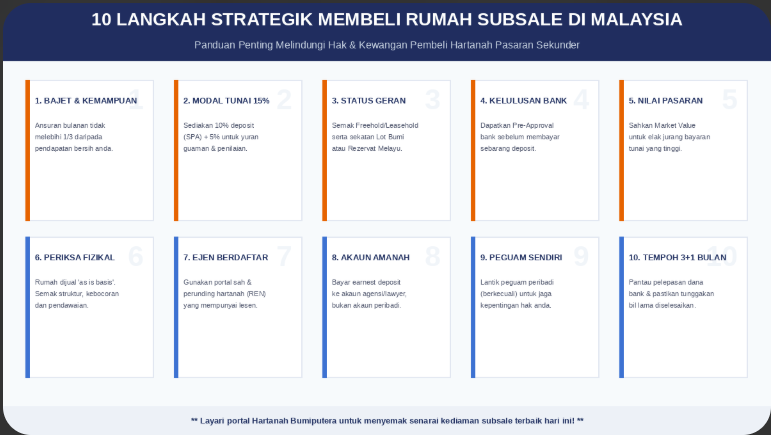
Here are 10 important tips you need to know to ensure your subsale house purchase is safe, smooth, and protected from losses:
1. Set a Budget & Calculate Your Actual Affordability
Before you browse housing listings, calculate your monthly cash flow capability first. As a golden rule, the monthly housing instalment commitment should not exceed one-third (1/3) of your monthly net income. Make sure you check your existing commitment eligibility in the CCRIS system to ensure healthy bank loan approval.
2. Prepare Minimum Cash Flow of 15% of the House Price
Purchasing a subsale house requires a much larger upfront cash deposit compared to new project houses which often offer rebates. You need to prepare:
10% House Deposit: Usually divided into 2-3% as a deposit (earnest deposit) and the remaining 7-8% is paid when signing the Sales and Purchase Agreement (SPA).
5% Additional Costs: Allocated for legal documentation fees, stamp duty (for MOT and loan facilities), and property valuation fees (valuation fee).
3. Understand the Land Ownership Status & Transfer Restrictions
Request a copy of the land title from the seller for verification. Identify whether it is a Freehold or Leasehold status. For Bumiputera buyers, ensure that you check the status of Bumiputera Lot or Malay Reserved Land. Leasehold properties with real restrictions or land use restrictions require approval from the State Authority (State Consent), which can take an additional 3 to 6 months.
4. Obtain Early Bank Loan Approval (Pre-Approval)
Never pay any upfront fees before checking your eligibility with the bank. Obtain a preliminary approval (pre-approval / indicative approval) from at least two or three banks. This step gives you a clear idea of the financing margin (whether the bank is willing to finance 90% or less) and prevents your deposit from being wasted.
5. Conduct a Current Market Value Check (Market Value)
The selling price requested by the homeowner does not necessarily match the value assessed by the bank. Ask the property agent or check directly with the bank valuer to obtain an indicative market value for the unit. If you agree to buy a house at a price of RM400,000 whereas the bank's market value is only RM350,000, you must pay the RM50,000 difference in cash (over-financing gap).
6. Conduct a Physical Inspection of the House During Viewing
Unlike new homes that come with a Defect Liability Period (DLP), subsale homes are sold on an "as is where is basis" (as they are seen at the time of viewing). Take time to visit the house during the day. Check for structural cracks, roof or ceiling leaks, water pressure, termite infestation, and electrical wiring systems to avoid severe hidden repair costs.
7. Use a Specialised Property Portal & Registered Real Estate Negotiator (REN)
Use special screening platforms like Hartanah Bumiputera to compare prices per square foot in a particular housing area. Ensure that you deal with a valid Registered Real Estate Negotiator (Real Estate Negotiator - REN) under the Board of Valuers, Appraisers, Estate Agents & Property Managers (LPPEH) to avoid fraud cases.
8. Pay Earnest Deposit Through an Official Stakeholder Account
When you agree to buy, you will sign a Letter of Offer (Letter of Offer / Agreement to Purchase) and pay a deposit (usually 2% to 3%).
⚠️ Critical Safety Practice: Ensure that this money is deposited into the account of a registered real estate agency (Client's Account) or the law firm's account as trustee (stakeholder). Never hand over cash or transfer money to the personal account of the selling agent.
9. Engage Your Own Independent Property Lawyer
Avoid sharing the same lawyer with the seller's party (sharing lawyer). Engage your own property lawyer to represent your interests, review the Sale and Purchase Agreement (SPA), ensure there are no encumbrances (encumbrances) on the title, and include a personal caveat to protect your rights as a buyer throughout the transaction process.
10. Monitor the 3+1 Month Completion Period & Key Handover
Proses transaksi rumah subsale biasanya perlu diselesaikan dalam tempoh 3 bulan (berserta tambahan 1 bulan pelanjutan) selepas SPA ditandatangani dan sekatan dipenuhi. Pastikan peguam anda memproses pindah milik dan bank melepaskan bayaran baki 90% tepat pada masanya bagi mengelakkan penalti lewat. Sebelum mengambil kunci (Vacant Possession), ensure the previous owner has settled all outstanding utility bills (property tax, land tax, water, electricity, and maintenance fees).