Malays and their homeland are inseparable. In fact, today's big cities also began as villages. For traditional Malays, a village is not just a place to take shelter, but a complete and ideal ecosystem of life. All daily needs are readily available within easy reach around them.
A Complete Ecosystem
At the village edges, vast paddy fields stretch out, providing rice—the staple food that never runs out. The same paddy fields also serve as a source of income, supplying land fish such as catfish, snakehead, catfish, and carp. Occasionally, if they long for sea catch, they only need to wait for the fisherman or fish seller to visit the village shop.
Their lives revolve within a self-sustaining cycle:
Livestock: Chickens and ducks are raised in the yard, supplying fresh eggs every morning. Behind the house, cows, goats, and oxen graze on grass, ready to be a main source of meat during festive seasons or celebrations.
Farming: Fresh vegetables are grown at the house boundary. Herbs grow wild and abundantly along the pond, bathing area, and behind the kitchen.
Living Like It's a Supermarket
Traditional Malay life is a hidden luxury. They don't need to buy, because nature has already provided everything.
Productive and Artistic Life
The myth that Malays are "idle" is a big mistake. In fact, their days are filled with work that demands sweat and high expertise.
Head of the Family (Male): When the paddy season is over, spare time is filled with housework or boat building—essential transportation for every family at that time. Some have magical hands; able to carve roughly for household furniture, or finely carve as intricate as the blade of a keris and celepa.
Housewife (Female): Besides managing the kitchen and assisting in the paddy field, Malay women are the weavers of heritage. Their hands are nimble in stitching fabric, weaving mats, shaping trays, making lekar, and fastening nipah roofs.
Once the tasks are completed, they spend time on hobbies that reflect their culture. Playing with spinning tops, flying kites, catching mynah birds, or occasionally watching cockfighting and buffalo fights. This is not a sign of laziness, but rather their way of celebrating life's balance after a hard day's work.
Social and Religious System
This community is driven by a cohesive and harmonious social system. Malays are very obedient and loyal to their leadership structure:
Islam is not just a religion, it is identity, belief, and a way of life inherited from their ancestors. Their lives are peaceful, orderly, and based on the feeling of contentment (qana'ah).
Collision of Two Worlds: The Birth of a Myth
This security began to be threatened when Western colonists arrived bringing foreign customs, economic systems, and ways of life. Suddenly, the British wanted to take the Malays away from their homeland. They were forced to become wage labourers—breaking their backs in dirty tin mines or cutting rubber in foreign plantations.
Of course, the Malays were unwilling. Their questions were simple and logical:
"If we go, who will cultivate our rice fields? Who will build our homes? Who will sweep the deck and caulk the hull of our unfinished boats?"
For the Malays, the colonial wage labour system is a form of "modern slavery" that strips away their freedom. They are already rich and independent on their own land. Why should they become servants to foreigners?
Land Discrimination: The British "Divide and Rule" Strategy
When the Malays refused to cooperate, the British began planning a cunning commercial strategy before Malaya achieved independence. The British introduced the Divide and Rule (Pecah dan Perintah) policy, which not only divided communities, but also manipulated land ownership.
The British began opening up and distributing strategic and fertile lands to European investors, entrepreneurs, and immigrant workers from China and India to boost large-scale mining and rubber plantation industries. Urban areas, suburban areas, and new economic hubs were created around these commercial lands.
Contrastingly, what happened to the indigenous people?
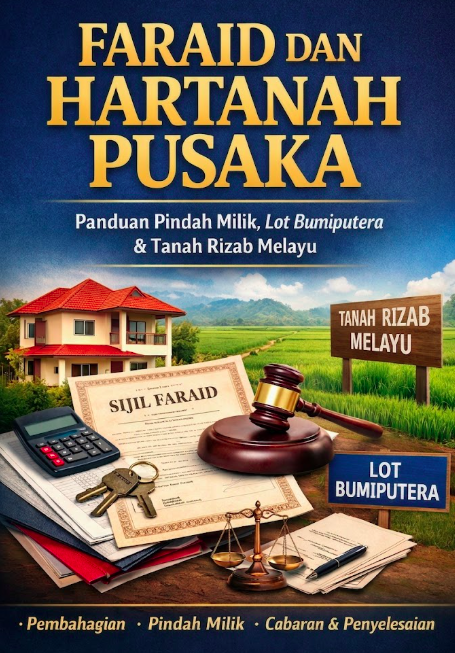
Malay Reserved Land Enactment (1913): The British established Malay Reserved Land supposedly to "protect" indigenous land. In reality, it was a tactic to confine the Malays to the rural areas. This reserved land is completely prohibited from being planted with commercial crops intended for export, such as large-scale rubber.
Self-Sustaining Agricultural Trap: Malays are forced and legally restricted to remain growing only rice. Anyone who tries to convert rice fields into rubber plantations will be fined or have their land seized.
Difficulties in Acquiring Commercial Land Ownership: When immigrants and large companies are given ease and land concessions to start businesses and farming in urban areas, Malay people's applications to obtain commercial land titles are often complicated and rejected on the grounds that they are "uninterested" or "lack expertise".
The Malay struggle to claim high-value land ownership often hits a dead end. They are trapped in subsistence farming that does not generate significant cash returns.
Impact on the Modern Socio-Economic Gap
The British policy of land discrimination and geographical segregation did not simply disappear after independence in 1957. It left deep scars and formed a structural socio-economic gap that has been inherited until today.
| Factor Influence | British Colonial Era | Impact on Modern Malaysia |
| Property Value | Malays are kept outside the city (low-value agricultural land). Other races and investors are placed in the city/ commercial areas. | Property in the city (owned by non-Malay/corporate) has skyrocketed into millions of ringgit, while Malay reserved land outside the city remains low in value and difficult to liquidate as capital. |
| Equipment & Capital | Funds generated from tin and rubber flow to towns and foreign companies. Malay villages lag behind in terms of modern infrastructure. | Imbalance in initial capital (generational wealth). The communities residing in towns have earlier access to investment and quality education, accelerating the mastery of modern economy. |
| Social Mobility | Malay = Farmer/Fisherman. Chinese = Miner/Merchant. Indian = Estate Worker/Labourer. | The existence of an income gap (income gap) between races. Persistent poverty has become more synonymous with rural communities, especially Malays and other bumiputeras. |
Conclusion
As a result of the Malays' reluctance to submit to Western capitalist models, the British not only labelled them as "lazy", but also systematically oppressed this indigenous society through oppressive land policies.
The "Lazy Malays" myth is merely part of the coloniser's psychological weapon. In fact, the wealth and economic gap that exists today is not because the Malays do not want to work, but because they have been sidelined geographically and economically for centuries before even managing to take their first steps towards the starting line of a free nation. Independence was achieved under conditions where Malays had lost the most valuable lands in the modern economic market.